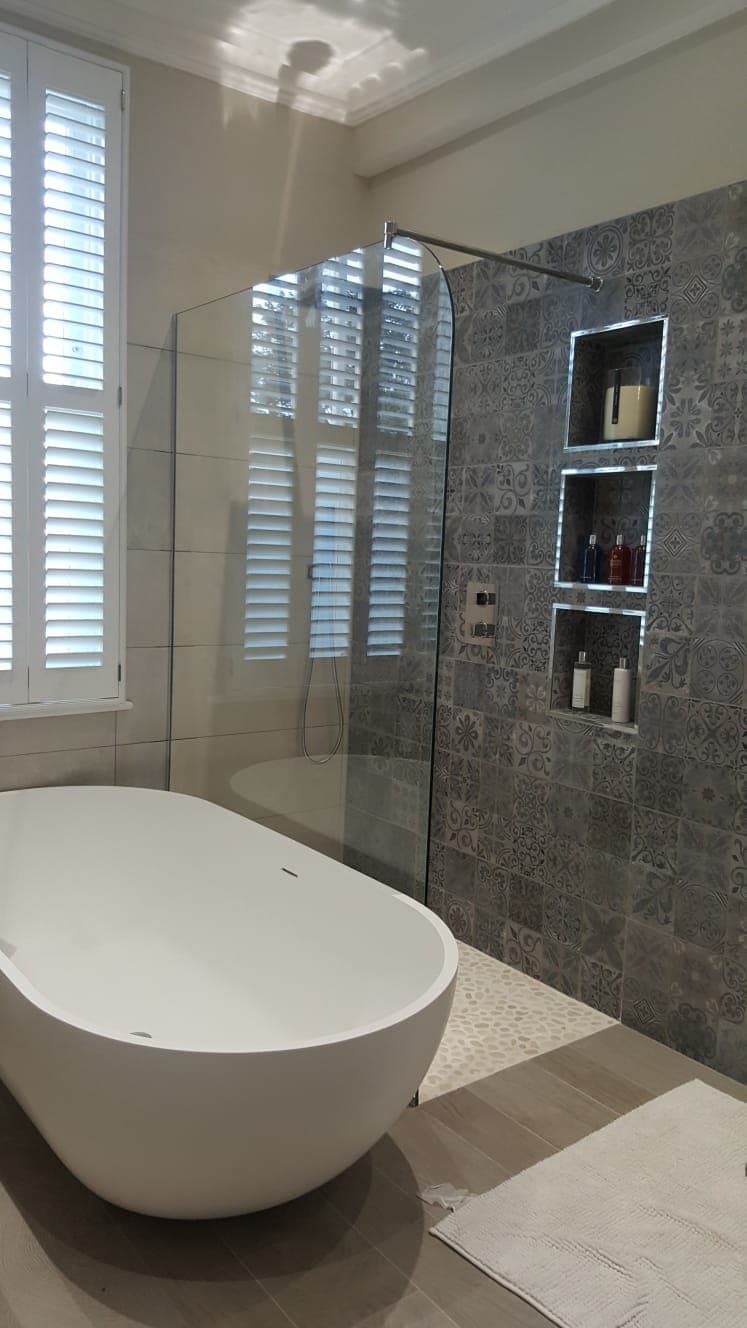
In practice it should be safety glass, toughened or laminated. A shower screen is not one of the critical locations in Approved Document K, but shower enclosures are covered by BS EN 14428 instead, and every compliant screen is toughened or laminated safety glass. Every shower screen and bath screen we make is toughened, in 8 or 10 mm glass, with polished edges, and you cannot order one from us any other way.
Two documents that get mixed up
They are often mixed up, so it helps to put them side by side.
| Document | What it covers | What it says about shower screens |
|---|
| Approved Document K (England) | Glazing in doors, beside doors and low in walls, where people may walk into glass | A shower or bath screen is not an Approved Document K location |
| BS EN 14428 | Shower enclosures | Every compliant screen is toughened or laminated safety glass |
Our safety glass checker treats it the same way. Pick a shower screen or enclosure panel and the answer cites BS EN 14428: shower screens and enclosure panels are always toughened or laminated safety glass. In the checker's own table the row reads "shower screen or bath screen, at any height".
What makes glass safety glass
Glass counts as safety glass when it has been tested and classified under BS EN 12600 (formerly BS 6206). Toughened glass made to BS EN 12150 and laminated glass made to BS EN 14449 are both classified that way. Ordinary annealed float glass is not safety glass, and when it breaks it breaks into long shards.
This is general guidance. For your project, follow the regulations and manufacturer instructions that apply, and ask your building control body, engineer or Gas Safe engineer where needed.
Toughened or laminated in a shower
Both are safety glass when classified, but they break differently. Toughened is the usual choice for doors, shower screens and splashbacks because it is stronger against knocks and heat, and when it breaks it crumbles into small, blunt pieces across the whole pane. Laminated glass cracks in a spider pattern while the interlayer holds the pieces together, so it is chosen where the glass must stay in place after breaking, such as overhead glazing and some barriers.
Our own shower range is toughened only. If you have a reason to want laminated glass in a shower, ask us before you order, and read toughened, laminated and annealed glass for the full comparison.
The glass we supply for showers and baths
Every shower and bath layout in our configurator uses the same glass rules. Toughening and polished edges are fixed, not options.
| Glass | Thickness (mm) | Toughened | Edges |
|---|
| Clear | 8 or 10 | Always | Polished |
| Grey tint or bronze tint | 8 or 10 | Always | Polished |
| Satin (etched) or fluted (reeded) | 10 only | Always | Polished |
There is no mirror glass on shower and bath screens, and 6 mm has been withdrawn from these families. The help page on shower screens and enclosures lists every layout you can order.
8 mm or 10 mm?
Our thickness guide gives 8 mm toughened as the wetroom standard and 10 mm for frameless glass. Both are offered on every shower and bath layout in clear and tinted glass, while satin and fluted come in 10 mm only.
Doors have one extra rule: a hinged door must be 8 or 10 mm, because the hinge has to grip the glass. The glass thickness tool explains the reasoning for each use.
Bath screens count too
For these purposes a bath screen is a shower screen. The safety checker's table puts "shower screen or bath screen" on the same row, covered by BS EN 14428, and our bath screens follow the same glass rules as our shower screens: toughened, 8 or 10 mm, polished edges. See bath screens for the four bath layouts.
Where to go next
Choose your layout and glass in the configurator. The options it shows you for a shower are already the safety glass ones.
Questions we get asked
Is laminated glass allowed for a shower screen?
BS EN 14428 is the standard for shower enclosures, and a compliant screen is toughened or laminated safety glass. Our own shower range is toughened only, so ask us if you need laminated.
Is 6 mm toughened glass enough for a shower?
We no longer offer 6 mm on shower and bath screens: every layout is 8 or 10 mm. Our thickness guide gives 8 mm toughened as the wetroom standard and 10 mm for frameless glass.
Does a glass splashback need to be toughened?
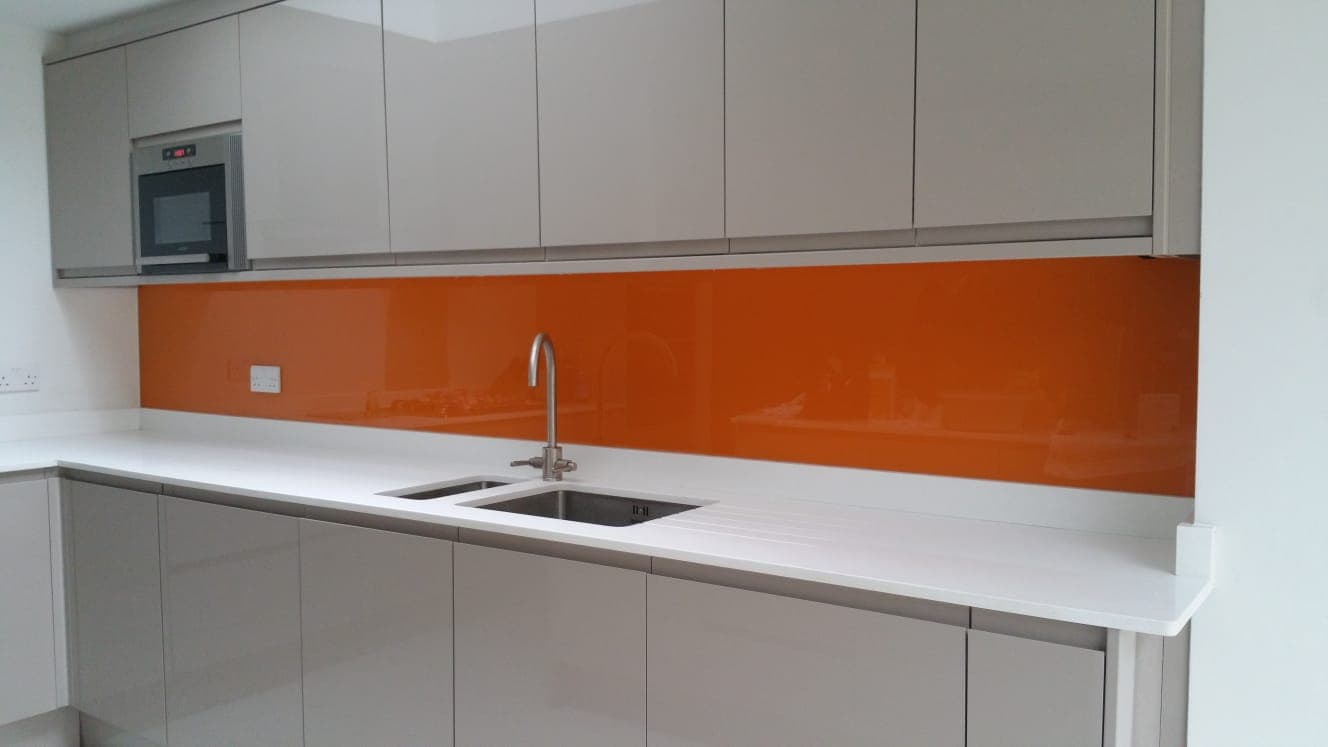
Every splashback we make is 6 mm toughened, and our thickness guide says 6 mm toughened is required behind hobs. See glass splashbacks for more.
Can I choose untoughened glass to save money?
Not for a shower or bath screen. We do not supply bath or shower glass that is not toughened, and the configurator will not price one.